Exercise, Muscle as an Endodcrine Organ, Glucose Metabolism
Muscle Hormones and Enzymes secreted during and after Exercise
Exercise triggers a complex cascade of chemical signals designed to manage energy, repair tissue, and improve mood. These substances are categorized into hormones (systemic messengers), myokines (muscle-derived signaling proteins), and metabolic enzymes.
1. Hormones Secreted During & After Exercise
Hormones are released into the bloodstream to coordinate the body’s response to the stress of physical activity.
2. Myokines (Muscle-Derived Signaling Proteins)
Skeletal muscle acts as an endocrine organ, secreting “myokines” directly from contracting fibers that communicate with other organs.
3. Key Muscle Enzymes
Enzymes catalyze the chemical reactions necessary for muscle contraction and energy production.
Reference:
This excerpt from Strength Training, Second Edition briefly details hormones and their role in the human body.
The following is an exclusive excerpt from the book Strength Training, Second Edition, published by Human Kinetics. All text and images provided by Human Kinetics.
Nearly every physiological function in the body is regulated by hormones—chemical messengers that travel via the bloodstream to target tissues in the body (e.g., muscle). Figure 4.1 provides an overview of the roles that hormones play. Because resistance exercise dramatically affects hormonal responses in the body and in part stimulates the development of tissues (including muscle and bone), you need to understand how the food you eat affects these hormones. Hormones play a significant role in metabolic balance. They largely are responsible for the fuel selection, partitioning of nutrients, and gene regulation that ultimately affect body composition and muscle mass.
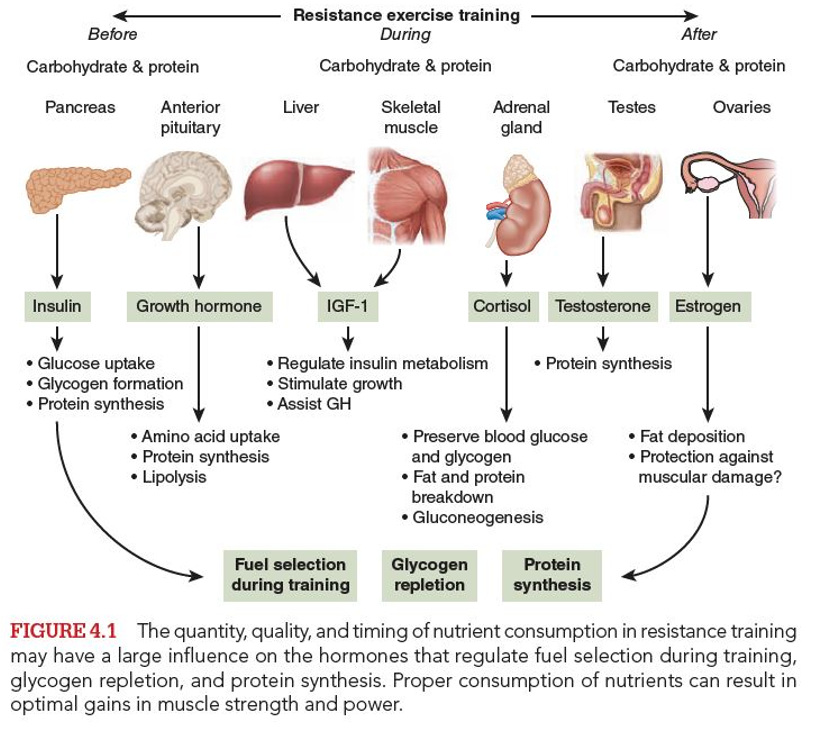
Acute bouts of resistance exercise (considering the load, number of sets, number of repetitions, and number and length of rest intervals) create a stimulus that generates a hormonal response. Muscle actions trigger a series of mechanical and chemical events in the muscle that signal hormones to regulate enzymes, which in turn regulate the genetic formation of proteins. For anabolic actions, just the muscle fibers that are activated as part of the motor unit used to perform the exercise will be affected. Conversely, catabolic factors (e.g., reactive oxygen species, cortisol, and so on) can target all muscle fibers. Some nutrients, such as the branched-chain amino acid leucine, can stimulate protein synthesis directly in muscle. Exercise increases blood flow and thus increases the delivery of hormones and nutrients to the target receptors on and in the muscle cells. The anabolic environment is enhanced by the exercise stimuli along with the availability of nutrients and hormones. Consumption of carbohydrate and protein appears to affect the responses of hormones involved in muscle metabolism—including insulin, testosterone, growth hormone, cortisol, estrogen, and insulin-like growth factor-1—thus affecting muscle protein and glycogen balance. Although the role of insulin in response to exercise and diet is understood, the influence of the other hormones listed remains unclear. Metabolic context is the important factor related to the role of certain hormones and their effects.
The popularity of endurance sports continues to grow worldwide. Now, from the National Strength and Conditioning Association (NSCA) comes the definitive resource for developing the endurance training programs that maximize performance and minimize injuries. The book is available in bookstores everywhere, as well as online at the NSCA Store.